01
Capture
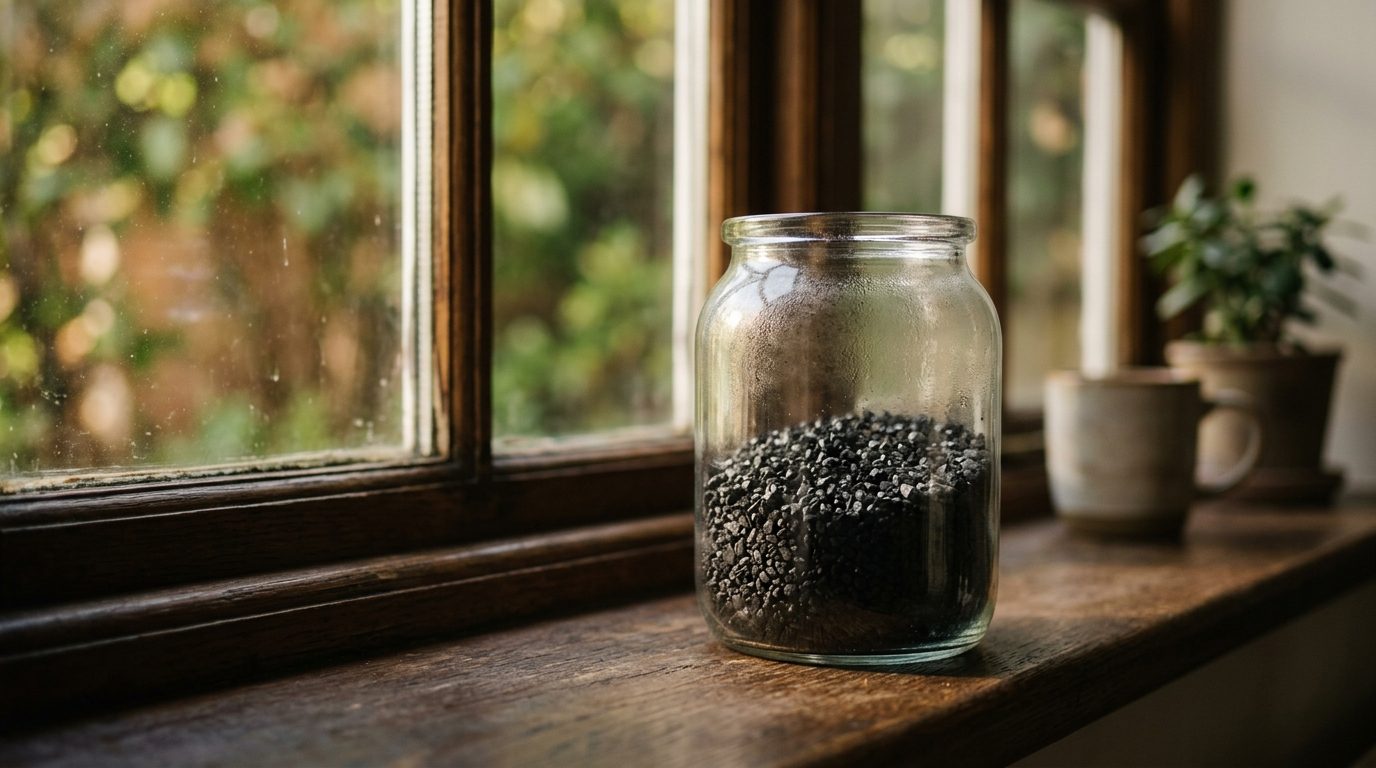
A charcoal bed takes the first pass — oils, soap, particulate, the things that make greywater grey. One box. Lifted out and swapped by hand.
Media · charcoalClosed-loop water
Scarcity is a plumbing problem before it is a planetary one. The water your home needs has already passed through it once. We keep it.
Tell us about your waterThe premise
We are not preppers. We do not sell fear and we do not sell a bunker. We read the same data everyone else reads, and we take it literally: fresh water is becoming the most valuable thing on your property, and almost nothing in a modern house is built to treat it that way.
Gallons of shower, sink, laundry and dish water
your house sends down the drain every year
Gallons H3O keeps
Cycled roughly once a week. Fifty-seven times a year. The same five hundred gallons, doing all of that work — and never leaving your land until it has done one more job on the way out.
The system
Wastewater treatment is not complicated. It has simply never been built at the scale of a single house, for a single person, in a form that can be understood and serviced by the person who owns it.
A charcoal bed takes the first pass — oils, soap, particulate, the things that make greywater grey. One box. Lifted out and swapped by hand.
Media · charcoalGraduated screens catch what the first pass let by. Pulled, rinsed, and replaced in the time it takes to change a furnace filter.
Media · mesh, graduatedA proper sand filter, running automated backwash and rinse on its own schedule. Nothing to remember. You will forget it is down there.
Media · silica, self-cleaningBackwash routes to the leach field or the irrigation line. Water stays on site and does one more useful thing before it rejoins the larger cycle.
Outfall · site-specificThat is the entire machine. We are not hiding the mechanism — the mechanism is the argument.
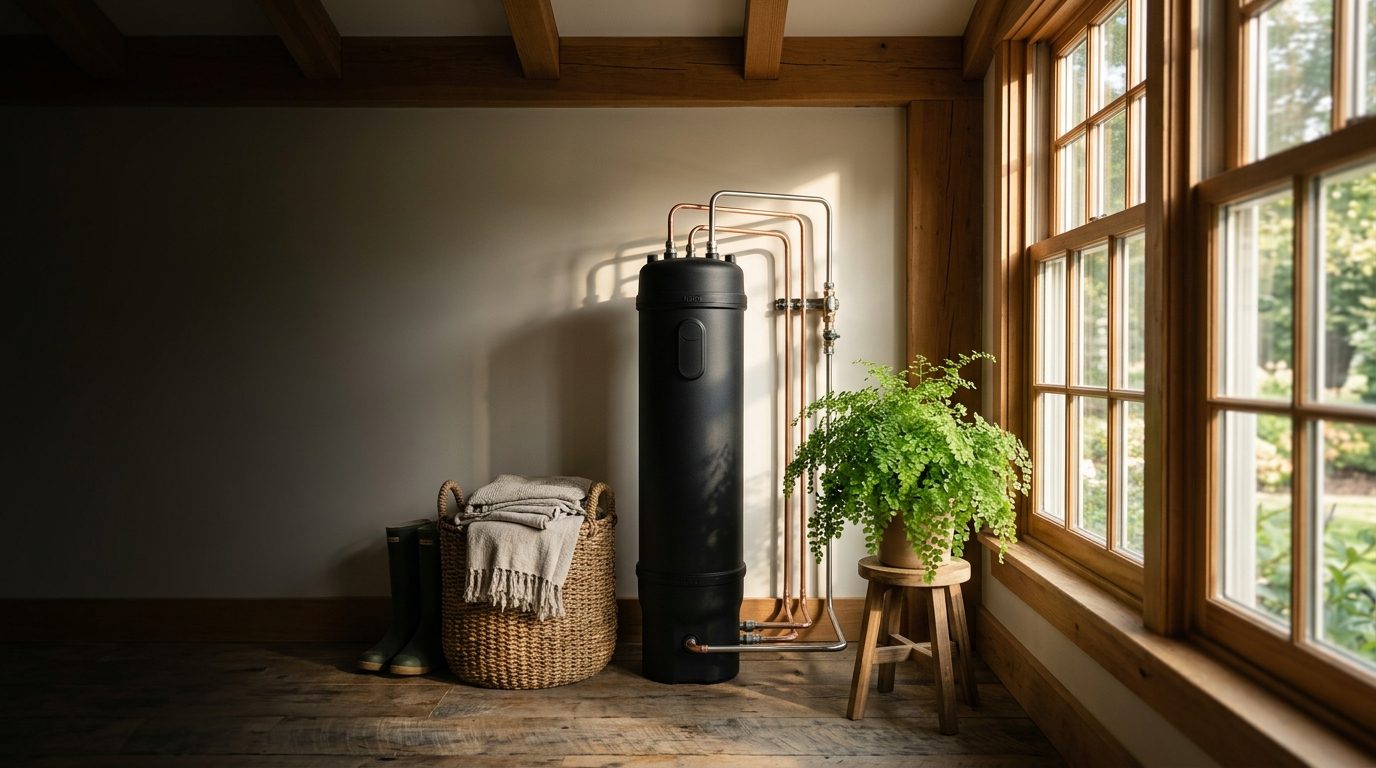
The media that does the work, and the finished system three weeks after install — in a real mudroom, not a lab.
The principle
Most water-reuse systems are designed for a house that does not exist yet. Ours starts in the hardest case — a finished home, a real basement, an existing stack, a family already living upstairs — because that is where the need already is.
A system that survives a retrofit will drop into a new build without an argument. The constraint is the product.
For new construction we will teach you to design around it. You will simply never have to.
The byproduct
When the water stays in the loop, the heat stays with it. Water heating is roughly 18% of a home's energy — the second largest line on the bill — and in a conventional house all of it goes down a pipe and into the ground.
Efficiency usually asks you to want less. This one hands the surplus back. Stand in the hot water as long as you like. There is nothing left to waste.
The failure of modern plumbing is that it mixes everything, then treats the mixture as a single problem. Separate the streams and each one becomes simple — and two of them become assets.
Your well becomes a reserve rather than a supply line. Drawn from deliberately, valued accordingly, and never used for work that recycled water can do.
Shower, sink, laundry, dish. Roughly 57% of everything a house uses indoors, captured, treated, and put back to work about fifty-seven times a year.
Never mixed, never in the loop. A composting toilet returns it to the soil as fertility, routed by bioswale and retention shaped to your specific site and its ecology.
Household greywater volume derived from Water Research Foundation residential end-use data · figures are design targets for the first build
We build the kit and hold the standard. A certified plumber in your region does the work — trained by us, accountable to us.
Your site, your well, your existing stack. We tell you honestly whether the house is a good candidate before anyone spends money.
Preassembled and commissioned at our shop, delivered as one crate. Nothing improvised on your basement floor.
A plumber from our network handles the replumb and the commissioning, to a standard we wrote and continue to own.
Consumables arrive by mail. One service visit a year. The rest of the time it is a box in a room you rarely enter.
First installs
A small number of homes, chosen for what they will teach us. If your well is on your mind, this is the conversation to have.
Tell us about your waterWe are choosing a small number of homes to build the first systems around. The more we understand about how your house actually uses water, the better the first systems will be — and the more honestly we can tell you whether yours is a good fit. Six short steps. Everything except your name and email is optional.
Every answer here shapes what the first systems actually are. If your home is a strong candidate for an early build, you will hear from Thomas directly, not from a sequence.