REF-24img/book.jpg · Book hero
The oldest strategy for surviving an unstable world, applied to this one.
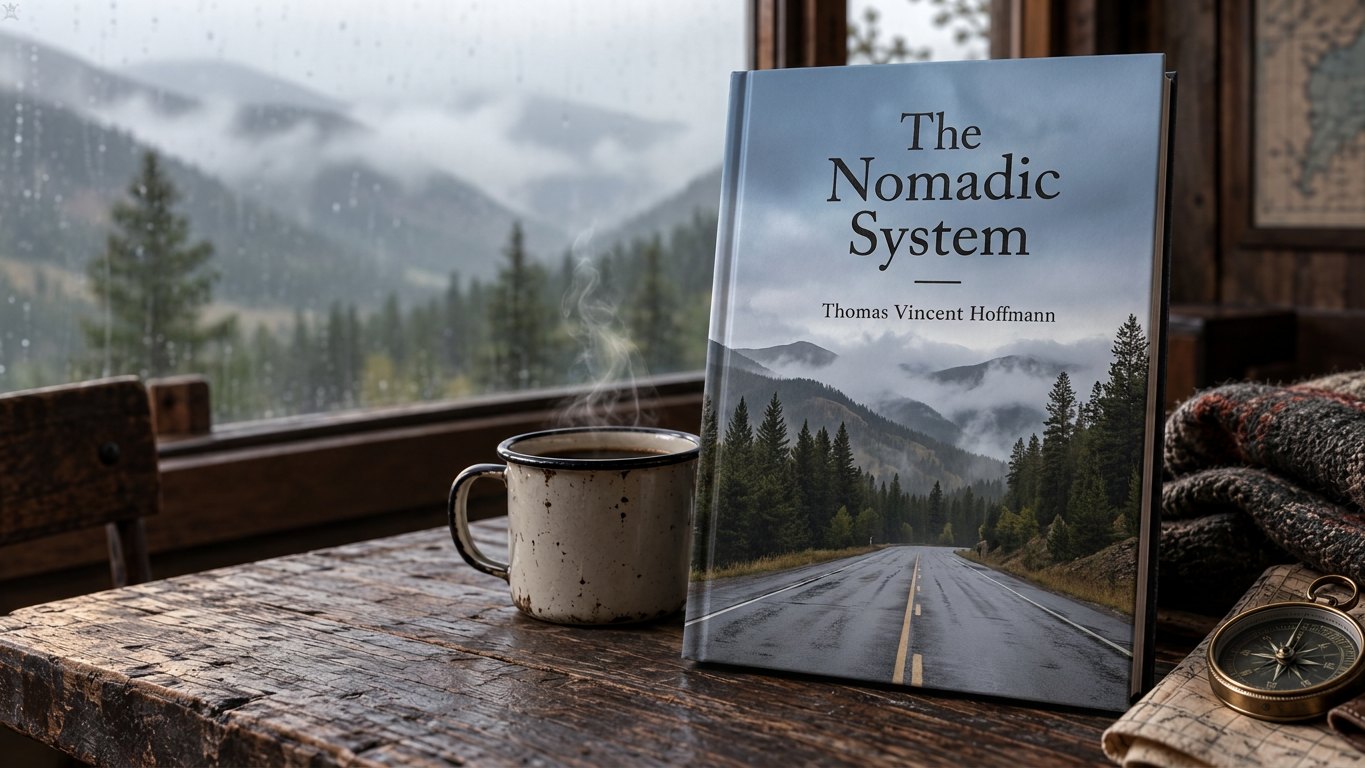
Nomadic peoples solved a problem we are about to have again. When the ground stops being reliable — when the water moves, the season fails, the herd thins, the market turns — you do not fortify. You adapt. You carry what matters, you know the country well enough to read it, and you build nothing you cannot leave or repair.
That is not a romantic idea. It is an engineering posture, and it is the most tested resilience strategy in human history. This book is an attempt to overlay it onto the world we actually live in: fixed addresses, thirty-year mortgages, brittle supply chains, and a climate that is going to keep moving the ground.
I have one qualification for writing it, and it is a strange one. I spent seven years building a machine to test the idea literally. The NS-1 was mobile architecture — power, water, heat, shelter and eventually a satellite dish, engineered into something a person could tow. I designed it, manufactured it, sold it, showed it, ran the company around it, and then watched the thesis fail on contact with real customers.
So the book has three parts. What I built. What it taught me — about objects, about leverage, about the difference between the thing and the system that holds it. And what follows from there: a theory of economic freedom that does not require anyone to leave, and the business models that become possible once you stop treating adaptability as a lifestyle and start treating it as infrastructure.
The title is a derivative. NS-1 stood for Nomadic System One. It turns out I named the argument before I understood it.
Provisional, in three parts. This is the structure as it stands, not a table of contents.
In progress and unsold. There is no publisher, no agent and no date, and I would rather say that than imply otherwise. If you work in publishing and the argument interests you, I would like to hear from you. If you just want to read it as it comes, the field notes are where it is being worked out.