← All work
Scale S

NS-1

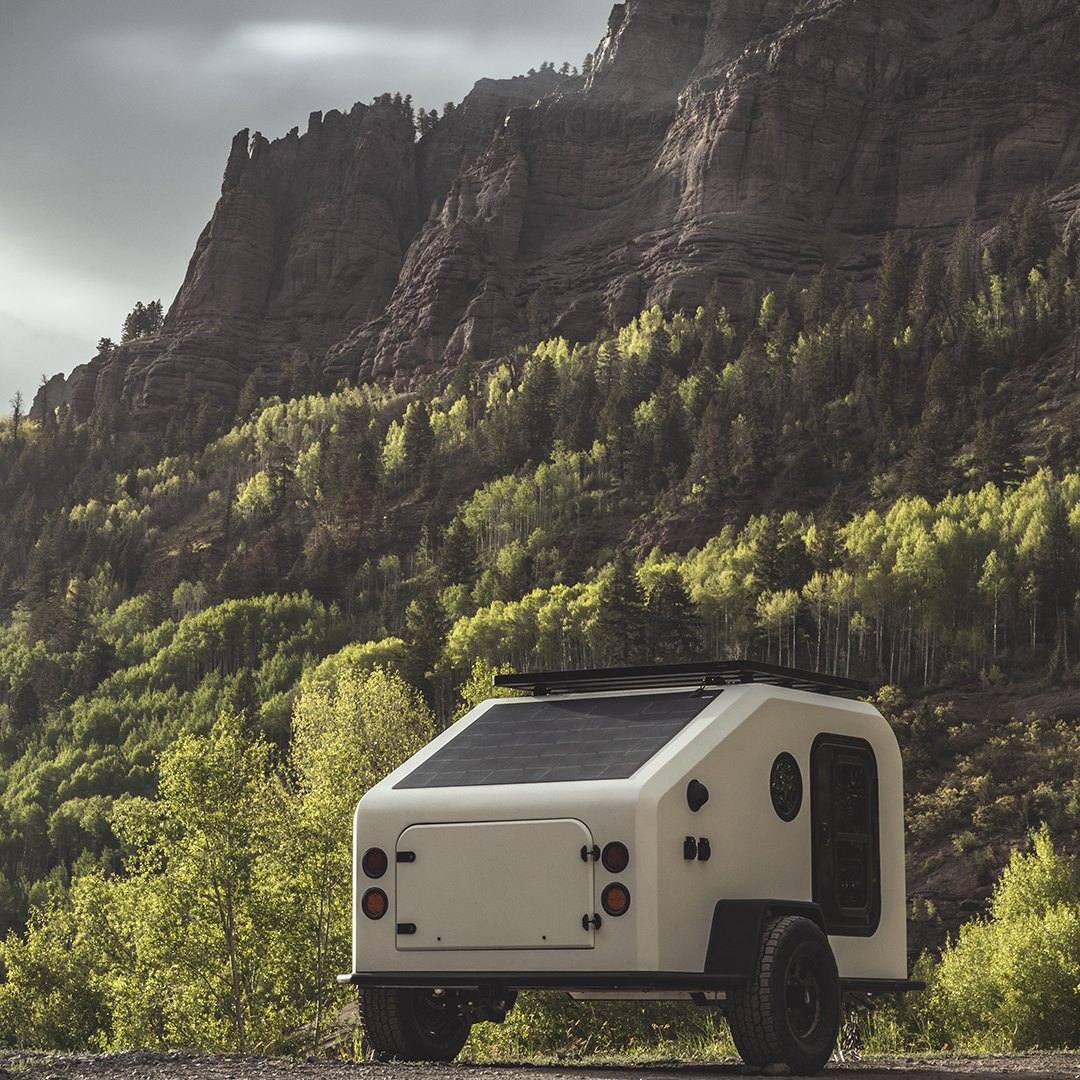
An all-electric, off-grid trailer built to answer whether a person could carry the conditions for a good life with them.

2019 – 2026Founder, designer, CEO — Colorado Campworksoperating
REF-02img/ns1.jpg · NS-1 below the cliff band
The question

Can everything a person needs — power, water, heat, shelter, connection — fit inside one object they can tow?

It began as a senior design project at CU Boulder's Program of Environmental Design and ended as a company with press, a composite manufacturing partnership, and trailers in the field. In between it was a shed I built in my backyard so that I could build the thing the shed was for.

The decision that set the whole direction was the cooktop. Choosing induction over propane meant the trailer had to be fully electric, which meant the battery had to be large, which meant the roof had to be solar, which meant the body had to be light, which meant composite. One choice about how you make dinner determined the entire architecture. I have never had a cleaner demonstration that a product is a chain of consequences hanging off a single early decision.

Then we put a satellite dish on it, and the last constraint on living anywhere quietly disappeared.

Dry weight
1,750 lb
Body
Full composite monocoque
Power
All electric — solar input, no propane
Origin
CU Boulder ENVD senior design project
Recognition
Press coverage, SEMA, design awards
REF-13img/ns1-detail.jpg · NS-1 detail — a joint, the galley, the electrical bay. Close and specific.
REF-14img/ns1-shop.jpg · NS-1 in the shop mid-build — the shell before paint, or the line of bodies outside the barn.

What it answered

  • Yes, technically. The box works. It is light, quiet, self-sufficient and genuinely good at what it does.
  • A small team with real craft standards can take a composite vehicle from a backyard to production.
  • Electrification is not a feature you add. It is a decision that reorganises everything downstream of it.

What it did not

  • It did not change how anybody lives. Customers used it for weekends, which is a good use and was never the argument I was making.
  • It could not reach the people the argument was about — the trailer costs more than the housing insecurity it claimed to address.
  • It answered a question about objects when the question was about systems. See the thinking page for the honest version of that mistake.
Nearby

Related work